
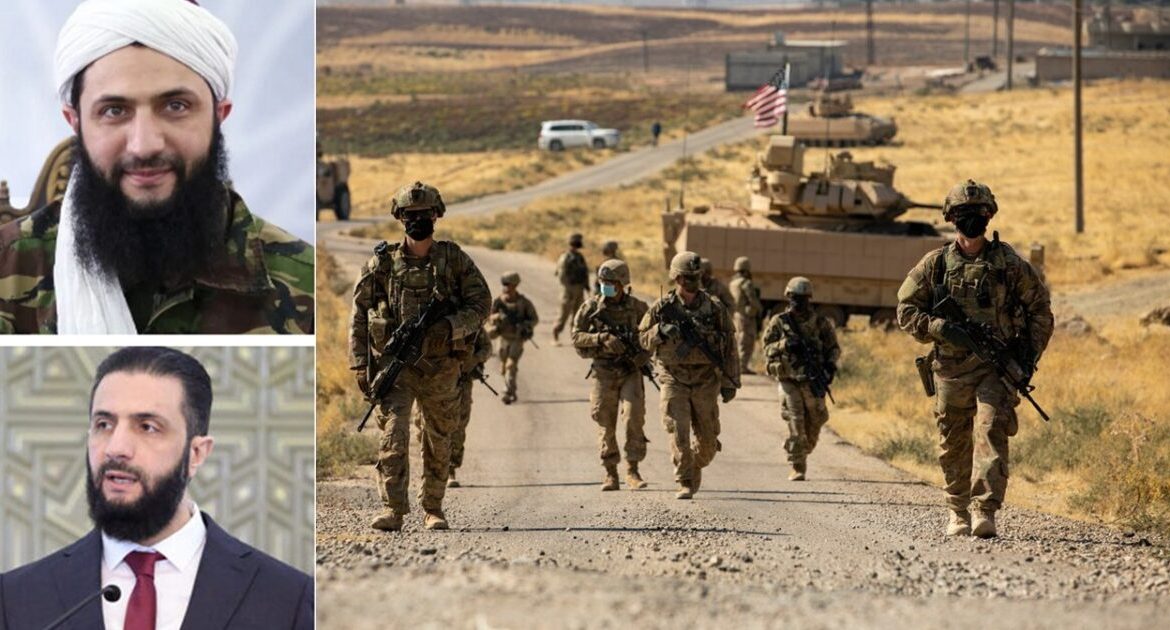
US Soldiers Killed in Alleged ISIS Attack, Syrian Security Forces Implicated


On December 13, 2025, two U.S. Army soldiers from the Iowa National Guard and one civilian U.S. interpreter were killed near Palmyra, Syria, during what officials described as an ambush. Three additional U.S. service members were wounded, along with at least two Syrian security personnel.
President Trump immediately issued a statement, calling it “an ISIS attack against the U.S. and Syria” and vowing “very serious retaliation.” The Pentagon likewise described the incident as “an ambush by a lone ISIS gunman.”
However, ISIS has not claimed responsibility for the attack as of the latest reporting. When ISIS formally claims an attack, it typically does so through Amaq News Agency, its official media arm established around 2014. No verified Amaq statement has been publicly confirmed in this case.
As the story developed, it became clear that the perpetrator was a member of the Syrian security forces with suspected ISIS ties.
Syrian officials in Damascus acknowledged the security-force connection. Interior Ministry spokesperson Noureddine al-Baba confirmed the attacker was a member of the Syrian Internal Security Forces but said he held no leadership role. An internal assessment on December 10 identified him as holding “extremist ideas,” and his dismissal had been scheduled for Sunday, December 14. The attack occurred the day before, on Saturday, an administrative holiday.
U.S. officials later offered a similar assessment. The director of the U.S. National Counterterrorism Center, Joe Kent, described the incident as an “insider attack,” or a “green-on-blue” attack involving partner forces. Fox News reported that preliminary information indicated the attacker had been a low-level member of Syrian government forces before later becoming connected to ISIS. U.S. Defense Secretary Pete Hegseth and U.S. Central Command stated the attacker was killed by “partner forces,” referring to Syrian allies.
According to available accounts, the Syrian security insider attempted to enter a meeting area with coalition leaders at a fortified Syrian Internal Security Forces facility in Palmyra. He opened fire at the gate and inside the compound before exchanging fire with Syrian and coalition guards and being killed. The Syrian Interior Ministry confirmed he was neutralized by Syrian security forces.
The attack occurred during a key leader engagement involving U.S. and Syrian officials at the base, located in Palmyra’s Badia desert region, an area controlled by the U.S.-partnered 70th Division where ISIS remains active and carried out more than 150 attacks in 2025. The attacker, who was assigned to Internal Security Forces in the Badia region, had been under evaluation at the time of the incident. Authorities said they are investigating whether the attacker had direct operational links to ISIS or merely adhered to its ideology.
The Syrian Observatory for Human Rights, a UK-based monitoring group called on Syria’s Defense and Interior Ministries to remove former regime members and individuals holding ISIS ideology from the security services. In the aftermath, eleven members of the Syrian general security forces were arrested for questioning. Taken together, the available evidence points to a classic insider or green-on-blue attack, in which a member of partner security forces turned his weapon on coalition troops.
The central unresolved questions remain whether the attacker acted independently under ISIS ideology or was an ISIS infiltrator operating within Syrian security structures, and why he was not removed from his post after being flagged days before the attack.
The attribution to ISIS appears politically motivated to avoid embarrassment for both the U.S. and the new Syrian government, given their recent partnership agreement. This is the first deadly attack on U.S. forces since Assad’s fall and al-Sharaa’s government took power – making it particularly sensitive for the budding U.S.-Syria relationship.
The Damascus government claims it warned U.S. forces about ISIS activity and that those warnings were ignored, an assertion that appears spurious. U.S. forces in Syria are deployed specifically to conduct anti-ISIS operations, and intelligence from local partners is the type of information they routinely incorporate into their threat assessments.
Framing the incident as an American failure to heed generic ISIS warnings appears to be blame-shifting. If Syrian intelligence issued general warnings about ISIS activity in the Badia region, that would explain why U.S. forces were operating there in the first place. The core failure rests with Damascus, which identified radicalization within its own ranks but failed to remove the individual before the attack, and is now deflecting attention from that internal security breakdown.
What is clear is that the perpetrator was a member of the Syrian security forces and that the regime knew he had been flagged for extremist views. Despite this, he remained in uniform and armed. Rather than addressing that internal security failure, the Syrian government is recasting the issue as an American lapse.
The most likely scenario is an insider attack carried out by a Syrian security forces member with ISIS sympathies, effectively a sleeper exploiting joint operations. This explanation aligns with U.S. assessments of ISIS tactics and with Syrian claims of failed extremist vetting, while remaining consistent with the fact that ISIS has not issued a verified claim of responsibility.
The absence of an ISIS claim may indicate a lone actor inspired by ISIS ideology rather than directed by the group, or a case where ISIS sees little benefit in formally claiming the attack. It may also reflect opportunism rather than coordinated command-and-control.
The incident heightens U.S.-Syria tensions despite President Trump’s recent engagement with al-Sharaa, raises the likelihood of renewed U.S. strikes on ISIS targets, and carries escalation risks if the attack is interpreted as regime-linked. Public reaction on social media reflects fatigue with prolonged overseas deployments and renewed calls to end what many describe as “forever wars.”
The crucial questions that will determine Syria’s future are whether al-Sharaa permitted the attack or whether he is unable to exert effective command over his security forces. Either scenario carries serious implications. If al-Sharaa knowingly allowed the attack, it would indicate that extremist elements continue to be tolerated within the security apparatus. If he did not authorize it but cannot control his forces, it suggests a regime that lacks effective command authority.
It remains to be seen whether al-Sharaa genuinely seeks to pursue change and reduce extremism to secure increased trade and investment from the United States, or whether Islamic extremist ideology will prevail over a pragmatic shift toward secular governance, capitalism, and democracy.
The post US Soldiers Killed in Alleged ISIS Attack, Syrian Security Forces Implicated appeared first on The Gateway Pundit.