
Why the Syrian Government Blames Its Own Security Personnel for the Attack on U.S. Soldiers


On December 13, 2025, a joint patrol of U.S. and Syrian forces near Palmyra, Syria, was ambushed by a suspected Islamic State (ISIS) gunman. The lone attacker opened fire on the convoy before being killed by American and partner forces. Two U.S. Army soldiers from the Iowa National Guard and an American civilian interpreter were killed in the assault, and three other U.S. service members were wounded.
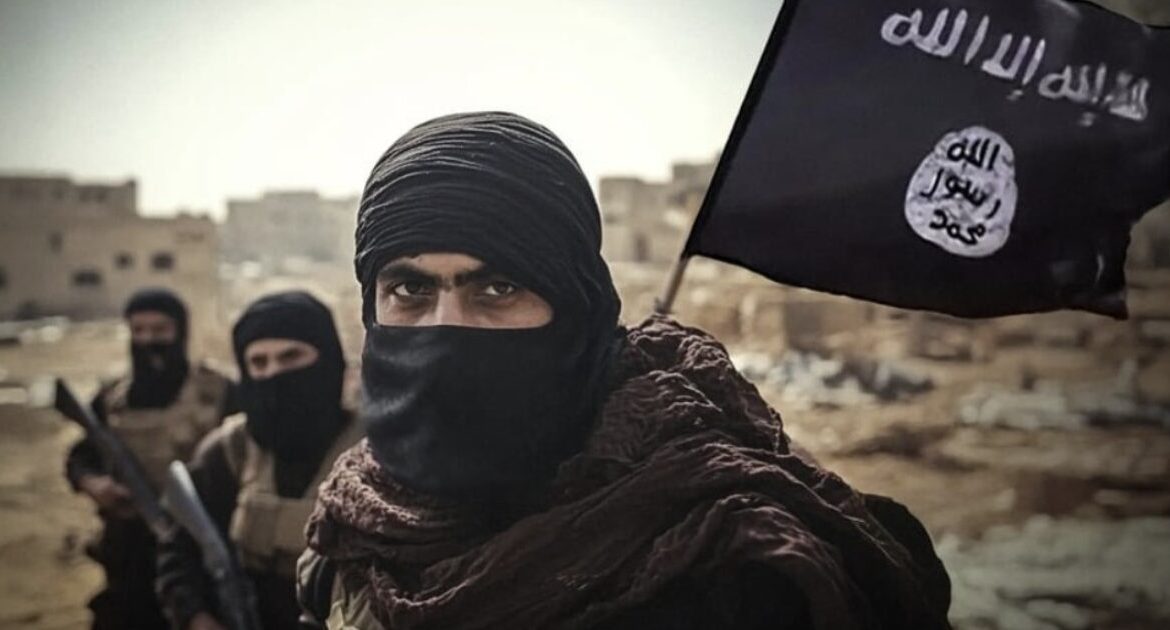
The U.S. military and President Donald Trump blamed the Islamic State for the attack and vowed serious retaliation, a position initially echoed by Syrian authorities, who also announced the arrest of several suspects. However, a Syrian government spokesperson later acknowledged that the attacker was a member of state security forces who had been radicalized by ISIS.
Al-Sharaa, the country’s new leader, was formerly the founder of an extremist group that pledged allegiance to al-Qaeda. He is now seeking to rebrand himself as a legitimate statesman to secure sanctions relief, U.S. trade, and foreign investment. To that end, he has prioritized normalizing relations with the Trump administration through intelligence-sharing on ISIS and Iranian proxies, joint counterterrorism efforts, and broader international legitimacy.
He recently became the first Syrian leader hosted at the White House, and Syria formally joined the international coalition fighting ISIS just one month before the attack. Against that backdrop, the question is why the Syrian government admitted that a member of its security forces carried out the attack on U.S. soldiers.
The first reason is that it would have been difficult to claim otherwise because U.S. forces were present and witnessed exactly what happened. The second reason is that Syrian security personnel were also present and witnessed the entire incident. The attack targeted a joint U.S.-Syrian patrol, with members of the Syrian Internal Security Forces directly involved. Two Syrian service personnel were wounded, underscoring their proximity to the attack. Syrian forces were on site, responded to the gunfire, and killed the attacker.
Multiple Syrian officers were present as part of a “key leader engagement.” The Pentagon and CENTCOM stated that the attack occurred during a meeting between U.S. troops and Syrian Interior Ministry officials who had traveled from Damascus to coordinate with local counterparts in Palmyra.
Leaks also forced the government’s hand. Reuters confirmed through three unnamed local Syrian officials that the gunman was a security insider with more than ten months of service who had been posted in multiple cities before Palmyra. That information was already circulating on social media and in opposition circles. The UK-based Syrian Observatory for Human Rights immediately reported that the attacker was a member of Syrian security forces and called on Syria’s Defense and Interior Ministries to remove former regime members and those with ISIS ideology.
The regime knew the attacker’s identity would inevitably surface through U.S. intelligence and after-action reports, intercepted communications, internal leaks, and local communities, including the attacker’s own unit. With Syrian and U.S. personnel present, the attacker wearing a Syrian security uniform with identification, and Syrian forces killing him on site, denial was impossible.
Contrary to intuition, admission served the regime’s interests better than denial. Its objective was narrative control and damage limitation, while reinforcing its core claim that it remains the last barrier against ISIS. By confirming the facts early, Damascus controlled the narrative before external disclosures, prevented later revelations from appearing as a cover-up, framed the disclosure as transparency rather than exposure, and positioned itself as investigative and cooperative with U.S. forces.
A denial that later collapsed would have been far more damaging. It would have undermined credibility with Washington, risked the collapse of a partnership before it began, increased the likelihood of U.S. retaliation, strengthened claims that the regime cannot control its own forces, and raised suspicions that the attack may have been sanctioned.
The regime’s framing is also deliberate. It is not claiming that a loyal officer acted on orders, but that a radicalized or infiltrated individual exploited his position. This distinction allows Damascus to blame ISIS penetration rather than institutional culpability, reinforce its counterterrorism narrative, justify tighter internal security and purges, and preserve the legitimacy of the broader security apparatus.
By stressing that the attacker held no leadership role, command authority, or sensitive duties, the Interior Ministry isolated responsibility to a single individual, shielding senior leadership and minimizing domestic backlash.
The official narrative claimed the attacker had been identified days earlier, scheduled for dismissal, and subject to routine reviews, and that Syrian authorities had warned U.S. partners about ISIS threats. Noureddine al-Baba, a spokesperson for Syria’s Interior Ministry, framed the incident as a failure caught mid-reform rather than a systemic breakdown, reassuring domestic audiences, signaling discipline to international partners, and echoing U.S. lessons from Afghanistan’s “green-on-blue” attacks.
This approach is not unusual. Authoritarian regimes, including Syria’s, have long acknowledged “rogue” or radicalized individuals within state structures, blamed extremist infiltration rather than institutional responsibility, and used such incidents to justify expanded security measures. From the regime’s perspective, converting a security failure into a rationale for tighter control is not a liability but a strategic advantage.
While the regime played its cards well by acknowledging that the attacker came from its own ranks, its account still leaves major questions unanswered. If Syrian intelligence identified the individual as an extremist on December 10, why was he left armed, kept on duty, and allowed access to a site visited by U.S. forces? Why was he not immediately detained, and why was his removal delayed until the next business day under the pretext of an administrative holiday?
Possible explanations include grossly inadequate vetting, widespread extremist infiltration, normalization of jihadist sympathies within the ranks, or a December 10 assessment constructed retroactively to claim foresight. The “administrative holiday” justification is particularly implausible. Identifying a potential ISIS sympathizer should have triggered immediate removal, especially with U.S. forces operating in the area.
The post Why the Syrian Government Blames Its Own Security Personnel for the Attack on U.S. Soldiers appeared first on The Gateway Pundit.