
First U.S. Strikes on Venezuela’s Mainland: Venezuelan Militia Incapable of Responding


President Trump confirmed that U.S. forces struck a facility on Venezuela’s coast used to load boats with drugs, describing it as a dock area destroyed around December 27, 2025. Speaking at Mar-a-Lago, Trump said there was a major explosion at the “implementation area” but declined to specify whether the military or CIA conducted the operation, saying only “it doesn’t matter” and “I know exactly who it was but I don’t want to say.”
No official Pentagon, White House, or CIA confirmation has been provided, and no Venezuelan sources or regional authorities have reported such a facility being destroyed.
This marks the first known land-based strike since the administration’s anti-narcotics campaign began in September 2025.
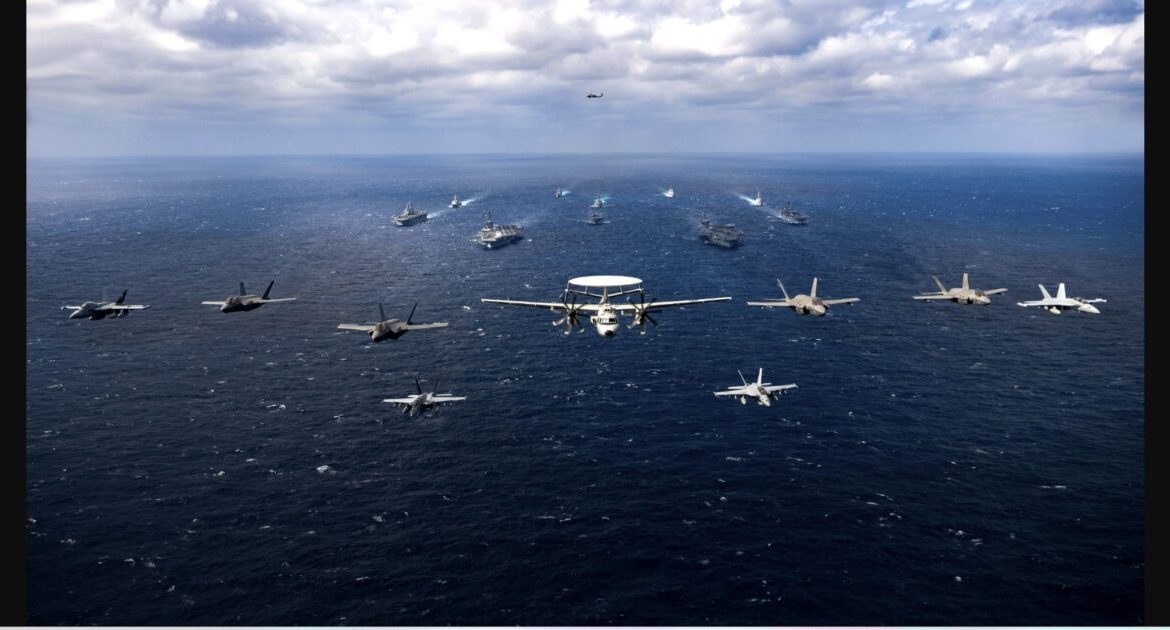
Since then, the U.S. has conducted at least 29 maritime strikes destroying 30 vessels and killing at least 105 people labeled “narcoterrorists,” deployed 15,000 troops and multiple warships to the Caribbean including the USS Gerald R. Ford carrier strike group, positioned CV-22 Osprey aircraft and C-17 cargo planes from Fort Campbell and Fort Stewart in the Caribbean theater, seized at least two Venezuelan oil tankers, and implemented a blockade of sanctioned oil tankers.
Trump signed a CIA finding in October authorizing covert action against Venezuela, and Defense Secretary Pete Hegseth signed an execute order in August directing Special Operations to sink vessels and kill crews. Trump designated the Maduro regime a Foreign Terrorist Organization.
Legal experts note that military strikes on Venezuelan sovereign territory without authorization violate international law and could trigger Venezuela’s right to self-defense under the UN Charter.
This marks a clear escalation from maritime interdiction to direct strikes on sovereign territory. However, from a practical standpoint, no escalation is possible because Venezuela is powerless to do more than complain.
Caracas has condemned the seizures and strikes as acts of piracy. Vice President Delcy Rodríguez accused Trump of attempting to steal Venezuelan wealth, while Maduro claims the United States is fabricating justifications for intervention.
Venezuela has also passed legislation imposing harsh penalties on supporters of the U.S. blockade.
Despite repeated threats to mobilize four million militia members and warnings that hosting U.S. forces would amount to declaring war, Venezuela has launched zero military counter-strikes against U.S. vessels, despite more than 30 boat attacks, zero response to the mainland dock facility strike, zero response to the seizure of Venezuelan oil tankers.
Venezuela’s military capabilities explain why it cannot respond. The country’s F-16 fleet has only 3–6 operational aircraft out of 18, with a 30–40 percent readiness rate after U.S. sanctions since the 1990s cut off parts and upgrades, forcing widespread cannibalization.
Its Su-30MK2 fleet has roughly 13 flyable aircraft out of 24, plagued by chronic maintenance problems and scarce Russian spare parts.
Any sortie against the USS Gerald R. Ford strike group would amount to a suicide mission, given U.S. F-35s, AWACS, and Aegis destroyers providing overwhelming detection and interception advantages. Venezuela has no AWACS, no aerial refueling capability, and no modern support aircraft.
The navy fields only one functional frigate and a single Type-209 submarine. Corvettes purchased from Spain were delivered without weapons and were later fitted with Chilean and Iranian anti-ship missiles, but they lack viable air-defense systems. Ground forces fare no better.
T-72 tanks and BMP-3 vehicles suffer severe degradation due to fuel shortages, limited training, and years of cannibalization.
Morale among rank-and-file troops is low, with Reuters reporting persistent shortages of food and basic supplies.
PBS has also noted that the oft-cited 4.5 million militia figure has remained unchanged for years and is almost certainly inflated.
Military analysts assess Venezuela’s only realistic doctrine as asymmetric resistance built around guerrilla tactics, urban disruption, and prolonged insurgency.
The regime claims to maintain roughly 280 small units trained in sabotage, neighborhood surveillance, and territorial defense, designed to absorb an initial strike, disperse, and operate independently.
This strategy is only relevant in the event of a U.S. ground invasion. Maritime interdiction and air strikes bypass Venezuela’s guerrilla preparations entirely.
Maduro’s survival depends on avoiding any action that would trigger a full U.S. invasion, and any direct attack on U.S. forces would provide clear legal justification for regime-change operations.
Maduro uses military rhetoric to rally nationalist sentiment and justify internal crackdowns, including arrests of opposition figures and new laws imposing up to 20-year prison terms for supporting the blockade.
Russia and China provide diplomatic cover at the UN Security Council but will not defend Venezuela militarily.
China continues to buy Venezuelan oil at a discount, with roughly 7 percent of Beijing’s oil imports coming from Venezuela in October 2025, providing revenue Maduro needs to survive.
Military analysts agree U.S. forces would almost certainly establish air and sea control within days.
A full invasion would require more than 100,000 troops and would face destroyed infrastructure and a protracted insurgency.
The political costs of urban warfare, the risk of damaging oil infrastructure Trump wants to secure, opposition from Colombia, Mexico, and Brazil, and the limited objective of pressuring Maduro rather than occupying the country explain why the U.S. has not and will not launch a full invasion.
The post First U.S. Strikes on Venezuela’s Mainland: Venezuelan Militia Incapable of Responding appeared first on The Gateway Pundit.