
Ayatollah Announces Death Toll, Blames Deaths on President Trump for ‘Encouraging Unrest’


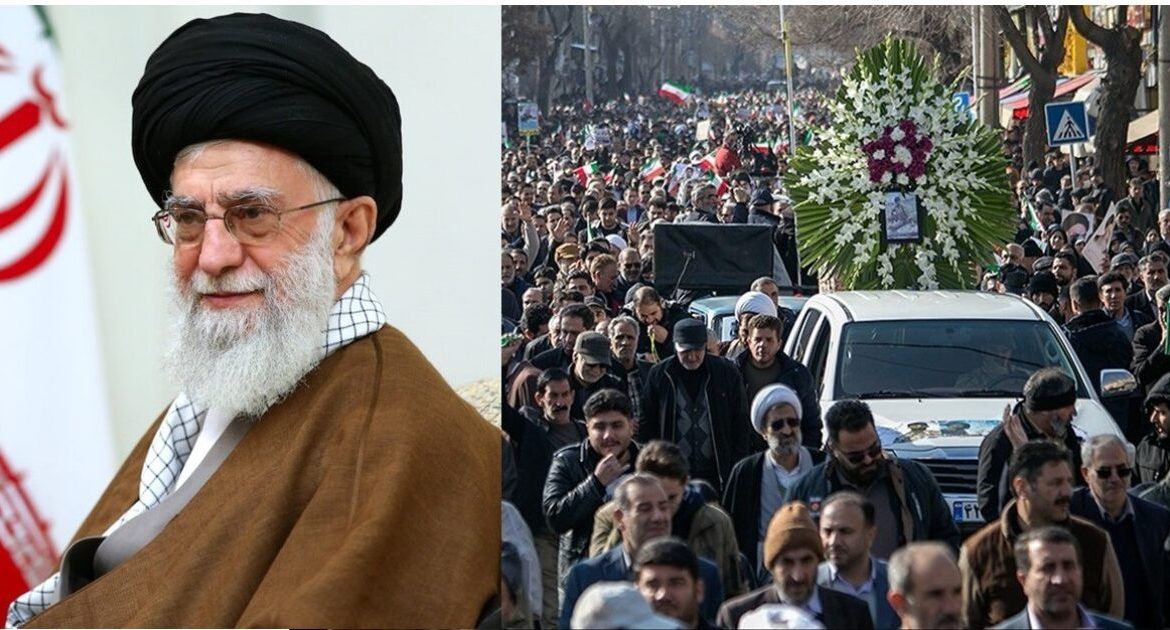
Iran’s Supreme Leader Ayatollah Ali Khamenei acknowledged that thousands of people were killed during more than two weeks of nationwide protests, blaming the deaths on U.S. President Donald Trump and accusing him of encouraging unrest by promising protesters U.S. military support.
Khamenei described Trump as a criminal and claimed the protests, which began over economic conditions and later shifted to calls for regime change and an end to Islamic governance, were driven by foreign-backed agitators. He did not address reports from witnesses and human rights groups that Iranian security forces fired on unarmed protesters.
An unnamed Iranian official told Reuters that authorities had verified at least 5,000 deaths, including about 500 security personnel. The U.S.-based Human Rights Activists News Agency reported 3,919 confirmed deaths, with nearly 9,000 additional deaths under investigation, along with 24,669 arrests. Human rights groups said security forces removed injured protesters from hospitals and restricted medical treatment, while phone outages left some wounded without help. Protesters and eyewitnesses described a crackdown involving live fire, drones, and paramilitary forces.
Khamenei warned of consequences for protest participants and called for unity to defend the Islamic system, while Iran’s judiciary signaled that some detainees could face execution under charges punishable by death. Some of the deadliest clashes were reported in Kurdish regions.
The government imposed a near-total internet shutdown with only limited restoration. Multiple Iranian state TV channels were hacked during the shutdown, briefly airing footage of anti-regime protests and messages from exiled crown prince Reza Pahlavi urging Iran’s military and security forces to break with the Islamic Republic and join the protesters. Streets have returned to an uneasy calm with police and military presence, though hit-and-run clashes continue.
Economic collapse, including an 80 percent currency devaluation, a weakened regional position following Israeli strikes, and escalating state violence, combined with the largest protests in decades, has created what analysts describe as an existential moment for the Islamic Republic. Protesters have been chanting “No Mullahs, No Shah” and demanding a democratic republic, leading many to believe that U.S. strikes could help turn the tide in favor of the protesters and bring an end to the ayatollahs’ rule.
President Donald Trump called for new leadership in Iran on January 17, describing Khamenei as a “sick man who should run his country properly and stop killing people.” Iranian President Masoud Pezeshkian responded that any attack on Iran or its supreme leader would amount to all-out war.
Trump came close to ordering military strikes on January 15 but pulled back due to multiple factors, according to reporting from Axios, the Washington Post, and the New York Times. Prime Minister Benjamin Netanyahu called Trump that day and urged him not to strike. He said Israel was not ready to defend itself from Iranian retaliation because the United States lacked sufficient air defense assets in the region and Israel had depleted interceptors during the 12-day war in 2024, and he also argued that the U.S. strike plan was not strong enough.
Saudi Crown Prince Mohammed bin Salman, along with officials from Qatar, Oman, Egypt, and the UAE, lobbied Trump not to attack, warning of serious consequences for regional stability and fearing Iranian proxy retaliation through Hezbollah and Houthis. Pentagon officials warned that U.S. firepower in the region was insufficient to repel expected Iranian retaliation and that officials had missed the window for action. The USS Abraham Lincoln carrier strike group is en route but will not arrive for 2-3 weeks.
Pentagon officials warned that the outcome of strikes was uncertain and could destabilize another Middle Eastern country, trigger a wider conflict endangering 30,000 U.S. troops in the region, and shock global oil markets. Treasury Secretary Scott Bessent argued for patience to let sanctions work.
By Wednesday afternoon on January 15, U.S. military forces were positioned and ready. The USS Roosevelt destroyer entered the Persian Gulf, allies had been warned of imminent strikes, personnel evacuated from bases in Qatar and Bahrain, and Iran closed its airspace. Officials in Washington and Middle Eastern capitals expected bombs to drop within hours.
Around 3 PM ET, Trump told reporters the killing had stopped, and the strike order never came. Iranian Foreign Minister Abbas Araghchi sent a text message through Trump envoy Steve Witkoff on January 15 morning, committing to stop the killing and halt planned executions of protesters. Trump later claimed Iran had canceled the hanging of over 800 people. One U.S. official said it was close and the military was in a position to act fast, but the order did not come.
Military action remains on the table according to the White House. Trump imposed sanctions on January 15 targeting 18 Iranian entities and individuals and announced 25% tariffs on any country doing business with Iran. Officials say another decision point could come within weeks once more assets arrive.
The post Ayatollah Announces Death Toll, Blames Deaths on President Trump for ‘Encouraging Unrest’ appeared first on The Gateway Pundit.