
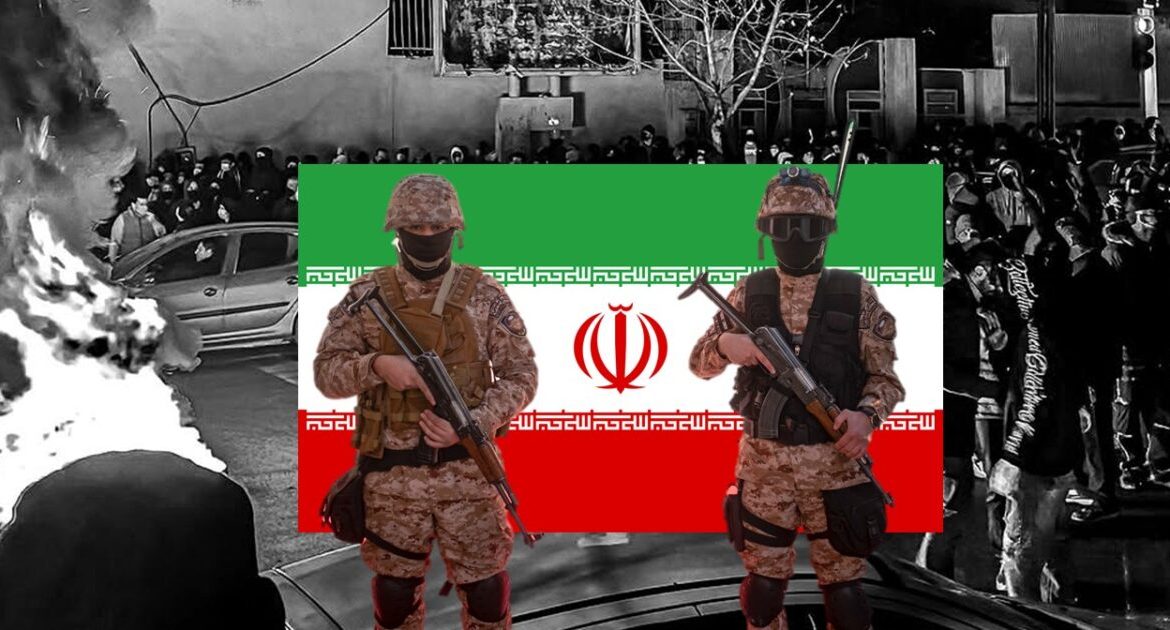
Iranian Regime Unleashes Foreign Islamist Militias and Terrorist Groups on Innocent Protesters


Iran’s long-standing sponsorship of Islamist militant organizations across the Middle East has made the regime led by Ali Khamenei a major destabilizing force in the region. Beyond training, funding, and directing armed groups abroad, Tehran has periodically invited foreign militias into Iran to help suppress domestic unrest, including the protests that began on December 28, 2025, and remain ongoing.
Understanding why Iran relies on these groups requires recognizing the regime’s strategic worldview. Iran is Persian and predominantly Shia, placing it outside the Arab and largely Sunni political order of the Middle East. These ethnic and religious divisions have shaped Tehran’s strategy of building proxy networks that extend its influence and provide deniable tools for internal and external repression.
Iraqi Shia militias have emerged as the primary foreign force involved in suppressing the current protests. According to Iraqi security sources cited by CNN, nearly 5,000 Iraqi militia fighters crossed into Iran beginning in early January 2026. Initial reports indicated several hundred fighters, but deployments expanded as the crackdown intensified.
Among the most significant groups is Kataib Hezbollah, one of the most powerful Iran-backed militias in Iraq. The group has been designated by the United States as a Foreign Terrorist Organization since 2009 and operates under the direction of Iran’s Islamic Revolutionary Guard Force (IRGC) Quds Force.
On January 19, its commander, Abu Talib al-Saidi, publicly threatened attacks on U.S. bases across the Middle East if the United States struck Iran, while the group’s secretary-general described defending the Islamic Republic as a religious obligation.
Another U.S.-designated Foreign Terrorist Organization, Harakat al-Nujaba, also deployed fighters into Iran. Hundreds reportedly crossed through border points in Diyala, Maysan, and Basra under the cover of religious pilgrimages. European military sources confirmed their presence in multiple Iranian cities, noting that their prior combat experience in Syria has been applied to urban repression and crowd control operations.
Kataib Sayyid al-Shuhada, a U.S.-designated terrorist organization, sent fighters into Iran through the Shalamcheh, Chazabeh, and Khosravi crossings beginning in early January 2026. As with other Popular Mobilization Forces militias, fighters reportedly assembled at a staging base in Ahvaz before dispersing to protest hotspots across the country.
The Badr Organization, while not designated by the United States, also participated. Video from January 11 showed Badr members at rallies in Basra publicly declaring support for suppressing protests in Iran.
Foreign fighters were largely deployed under the cover of religious travel, entering Iran as “pilgrims” visiting the Imam Reza shrine in Mashhad. They were reportedly paid about $600 per month. By January 11, more than 60 buses carrying roughly 50 fighters each had crossed the border, while daily flights from Najaf International Airport to Tehran and Mashhad increased from seven to thirteen. European military assessments cited by CNN confirmed the presence of these militias in Hamedan and other sensitive areas, stating that the use of foreign forces aimed to prevent fraternization between Iranian security forces and protesters.
The Fatemiyoun Brigade, composed of Afghan Shiite fighters originally recruited by Iran’s IRGC for the war in Syria, was also deployed. Stranded in Iran after the fall of the Assad government in late 2025, the group was redirected against Iranian protesters. Iran International reported that Fatemiyoun fighters carried out a significant share of the killings during the January 2026 crackdown. Iranian attorney Tahmineh Dehbozorgi cited contacts describing their involvement in street-level shootings, while director Mohsen Makhmalbaf stated that thousands of Afghan militants were operating in civilian neighborhoods, with some areas placed under nighttime restrictions.
Pakistani Shiite fighters from the Liwa Zainabiyoun, also recruited for Syria and similarly stranded in Iran, were deployed alongside the Fatemiyoun Brigade. Iran International reported that Zainabiyoun units were likewise involved in killings during the crackdown and operated in coordination with Iranian security forces in both streets and residential areas.
Hezbollah’s role appears more limited than in previous unrest. While some operatives were reportedly present, the group’s weakened position following Israeli operations in 2024–2025 constrained its involvement. On January 13, 2026, Hezbollah condemned the protests as an “American-Israeli conspiracy” but stopped short of declaring direct participation, amid domestic pressure in Lebanon to avoid further escalation.
According to former Iranian officials, Ali Larijani, secretary of the Supreme National Security Council, has overseen the response to the protests and is described as the key figure directing the crackdown.
Iran International reported that the regime’s reliance on foreign militias reflects concern that Iranian police may refuse orders to fire on unarmed civilians or lack the capacity to suppress protests in more than 100 cities.
Behnam Ben Taleblu of the Foundation for Defense of Democracies said the regime has created a failsafe against popular unrest by deploying foreign proxies. He noted that groups including Lebanese Hezbollah, Iraqi Shiite militias, and the Afghan Fatemiyoun serve the same purpose: to fire on Iranians when Iranian forces will not.
The post Iranian Regime Unleashes Foreign Islamist Militias and Terrorist Groups on Innocent Protesters appeared first on The Gateway Pundit.