
Media Claim: “ICE Drags Citizen in the Snow in His Underwear,” But There Is More to the Story


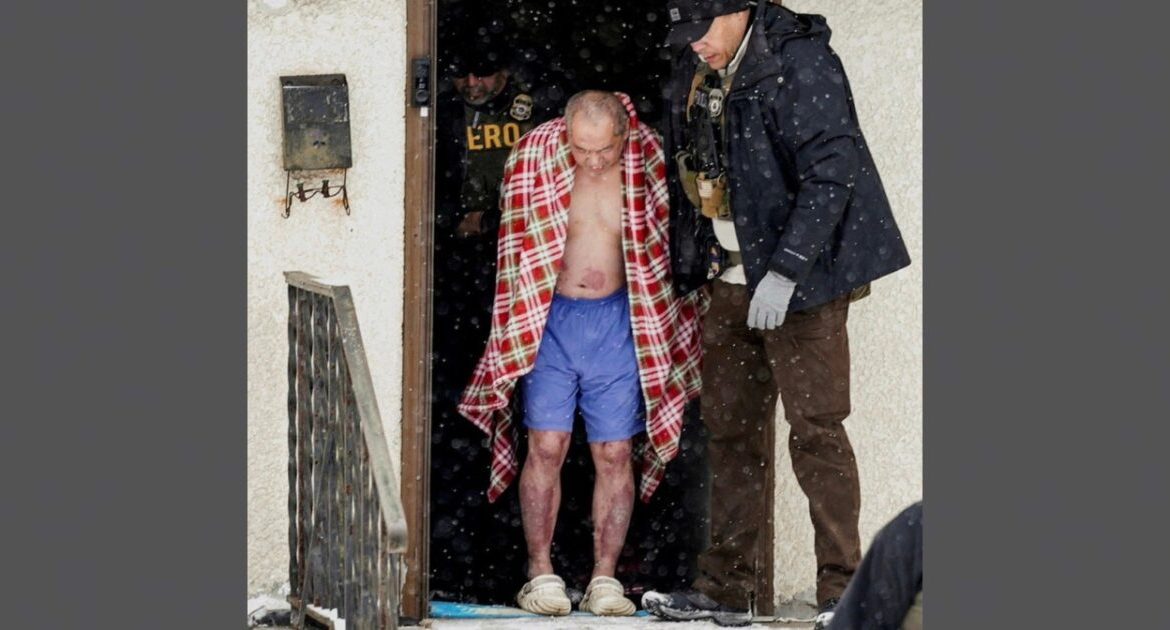
On January 18, 2026, ICE arrested ChongLy “Scott” Thao in St. Paul, Minnesota. The incident went viral because of footage showing Thao, a 56-year-old naturalized U.S. citizen, being led from his home in sub-freezing weather wearing only underwear and sandals with a small blanket over his shoulders.
The Thao family states that ICE agents forced their way in without a warrant, pointed guns at the family, including a 4-year-old, and refused to look at Thao’s ID. They claim he was driven to a remote location, photographed and fingerprinted, and only returned home after agents realized he was a citizen.
The facts are very different from the family’s claims and the media framing. First off, the agents had a warrant. They were using an administrative warrant rather than a judicial warrant, which is consistent with new ICE directives.
Under the directive signed by Acting ICE Director Todd Lyons, ICE has been instructed that administrative warrants (Form I-205) are now considered sufficient for residential entry. If an individual with a final order of removal is believed to be inside and refuses to open the door, agents are authorized to use a necessary and reasonable amount of force to enter.
DHS described it as a targeted operation for two convicted sex offenders, Kongmeng Vang and Lue Moua. The reason agents used a battering ram to break in was because, according to the Associated Press, a family member alerted Thao that agents were banging on the door, but he told them not to open it.
Agents drew their weapons because the targets were dangerous criminals. Moua is described as “a violent illegal alien sexual offender” and a “child predator,” while Vang is described as a “criminal illegal alien” from Laos with a 2016 removal order and a history involving sexual assault and gang activity.
Because Thao matched the physical description of one of the targets, ICE protocol required agents to use a new mobile biometric app, Mobile Fortify, which captures fingerprints and facial photographs to verify identity. However, Thao refused. Consequently, he was taken into custody, photographed and fingerprinted, and then returned home.
Commenters on social media are outraged that Thao was taken out of the house in his underwear. However, there is no indication that agents stripped him. He was apparently already in his underwear when agents arrived. The half-naked aspect and the use of force are consistent with High-Risk Entry protocols. If agents believe a suspect is a convicted sex offender, they prioritize speed and tactical dominance over the suspect’s comfort.
However, he would not have been removed at all if he had allowed agents to fingerprint him at his home.
Media outlets are also outraged that this happened to a citizen. However, there was no way to verify his citizenship or identity until after the fingerprints were taken.
While media are framing this as a series of blunders, the reality is that ICE made only one mistake: Lue Moua, the man DHS claimed was living with Thao, has been incarcerated at the Minnesota Correctional Facility in Faribault since September 2024. However, Kongmeng Vang is not in jail.
The plot thickens. Not only is there a connection between Thao and Vang, but Vang also previously lived at this address. DHS identifies Vang as the ex-husband of a Thao family member.
According to the family, Vang moved out when they divorced, which they say explains why he might be linked to the address in older databases. However, they insist he has not lived there for years.
There are a number of other odd details in the case that suggest there is more to the story. Thao’s son, Chris Thao, told the Associated Press that ICE agents stopped him on his way to work just before they went to detain his father. He said he was driving a car he had borrowed from his cousin’s boyfriend, and that the boyfriend’s first name matches that of one of the men DHS said it was seeking. Chris Thao said he did not know the boyfriend’s last name.
At this point, it is odd that ICE went to the address where they believed at least one of the offenders lived and found a Lao man with a similar description who claims to know nothing about the two men. Then there is the issue of Chris Thao and the borrowed car. ICE does not conduct routine traffic stops, which raises the question of why he was stopped and what the outcome of that stop was, or whether the traffic stop even happened.
Furthermore, how does Chris know the person well enough to borrow his car, but not well enough to know his last name? According to reports, Chris assured the agents that the boyfriend was not the person they were looking for. But how could Chris know this if he did not know the boyfriend’s last name?
Some media speculate that agents were following the car because the boyfriend has a similar name to the man they were looking for. But in that case, during the traffic stop, wouldn’t agents have run the plates and registration to find the address where the car was registered, and wouldn’t they have gone there instead of Thao’s house? If the car was the target, then how did agents end up at Thao’s house at all, given that the house appears to have no direct connection to the car?
Many of the facts of the case suggest that additional investigation will be needed and that the link between Thao and his address may help in the apprehension of the convicted sex offender Kongmeng Vang, who has an outstanding final order of deportation.
The media claims the incident represents a failing of ICE, or specifically of ICE intelligence, but looking at the facts, ICE went to the right house associated with Vang, a criminal who is still at large. The people in that house were related to Vang. The family said they will sue ICE for violating Thao’s rights as a citizen.
However, Thao was removed from the home only because of his noncompliance in allowing agents to definitively verify his identity using biometrics. Even with Thao refusing to open the door and rejecting the very identification measures that could have ended the ordeal, the family told reporters that the entire incident from start to finish lasted only one to two hours. Claims of overreach, failure to do due diligence, or violations of rights appear to lack validity.
The post Media Claim: “ICE Drags Citizen in the Snow in His Underwear,” But There Is More to the Story appeared first on The Gateway Pundit.