
Pentagon’s New Boat Strike – Takeaway Is Clear: Want to Live? Stop Running Dope


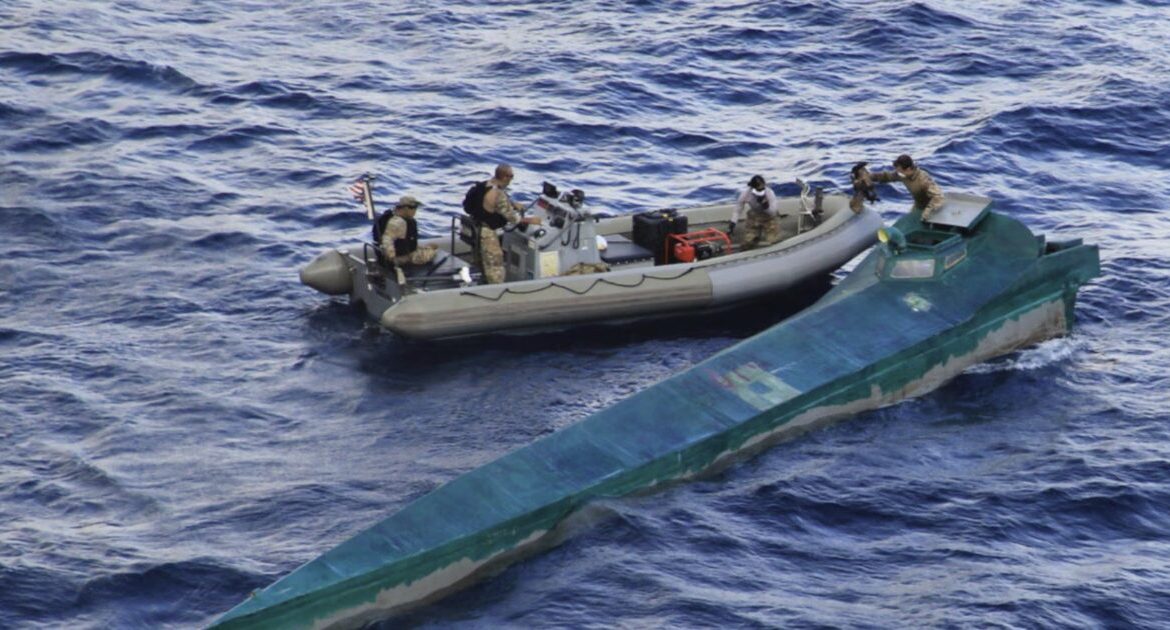
The Pentagon announced that the US military conducted another lethal strike on a boat in the eastern Pacific suspected of transporting illegal narcotics, killing four men and intensifying scrutiny over the legality of such attacks. The announcement came as senior military officials briefed Congress about a previous 2 September incident in which a second strike was launched against two survivors after an initial attack.
Lawmakers who viewed the classified video disagreed sharply over whether the follow-up strike was justified. Democratic congressman Jim Himes described the footage as deeply disturbing. Republicans, including Tom Cotton, defended the strike. The situation has fueled debate over whether the United States may have violated the laws of armed conflict.
Legal experts say the larger issue is the entire campaign of 22 military strikes that have killed 87 suspected drug smugglers. They argue this debate misses the central problem: the Trump administration’s claim that drug trafficking constitutes an armed conflict, allowing wartime authorities to kill suspects at sea. Traditionally, the United States treats smuggling as a criminal issue handled by the Coast Guard, not as combat.
Legal scholars say an unarmed cocaine-carrying speedboat is not a warship and that none of the eleven people killed on September 2 were engaged in combat. Trump has declared cartels to be enemy forces and boat crews “combatants,” while a Justice Department memo has accepted this framing, treating drug profits as military assets. Critics counter that overdose deaths or cartel violence do not meet the definition of armed attack, and leaders of Mexico and Colombia reject the U.S. justification.
The Trump administration’s position is that drug cartels like Tren de Aragua are conducting “armed attacks” against the United States, and that narcotics trafficking constitutes a form of irregular warfare triggering national self-defense. The legal theory underpinning this campaign draws on post-9/11 precedents involving groups like al-Qaeda and the Islamic State. Critics argue the administration’s framing is flawed because Islamic terrorist organizations had organized military structures and political objectives, unlike narcotraffickers who are primarily motivated by profit.
They maintain that cartels should be treated as transnational criminals, making drug interdiction a law-enforcement operation subject to stricter limitations than military actions conducted in defense of the country. However, the Trump administration has designated several transnational narcotrafficking gangs as terrorist organizations, which they argue qualifies them for an anti-terrorist level of response similar to the post-9/11 precedent.
There appear to be lawmakers and media outlets claiming that the cartels are not terrorists or have not been designated as such, but this framing is false. The U.S. Department of State announced on February 20, 2025, that eight major international criminal cartels—Tren de Aragua, MS-13, the Sinaloa Cartel, CJNG, Cartel del Noreste, La Nueva Familia Michoacana, the Gulf Cartel, and Cárteles Unidos—have been formally designated as Foreign Terrorist Organizations (FTOs) and Specially Designated Global Terrorists (SDGTs).
The State Department fact sheet details each group’s activities, including kidnapping, extortion, assassinations, drone attacks, intimidation of civilians, and violence against government officials across the Americas. These designations sever the groups from the U.S. financial system, block any property they hold under U.S. jurisdiction, and prohibit U.S. persons from engaging in transactions with them.
The actions also strengthen law-enforcement cooperation with partner governments and support further sanctions and criminal prosecutions. The designations were issued under Section 219 of the Immigration and Nationality Act and Executive Order 13224, with FTO status taking effect upon publication in the Federal Register.
The facts are clear: Congress and the State Department have formally determined that the major drug cartels qualify as terrorist organizations. Their designation as Foreign Terrorist Organizations and Specially Designated Global Terrorists legally obligates the United States to treat them as terrorist actors. These designations significantly expand what the government is permitted to do.
They allow counterterrorism intelligence operations against the cartels, authorize the use of military assets to support law-enforcement missions, and strengthen the legal basis for using force in national self-defense if cartel activity threatens U.S. citizens, U.S. forces, or U.S. territory.
While an explicit congressional authorization for sustained military operations has not yet been passed, the designation establishes that the cartels are no longer merely criminal groups. They are now terrorist organizations under U.S. law, and the government may respond accordingly.
If Democrat lawmakers are concerned about the lives of narcotraffickers, they should launch a campaign urging narcos to stop trying to transport drugs to the United States. They could promote catchy slogans like “Don’t Run Drugs. Don’t Explode,” “Drug Boats Sink. Your Life Doesn’t Have To,” or the short and simple “Want to Live? Stop Running Dope.” They could even use President Trump’s own warning: “Drug boats can’t outrun missiles.”
The post Pentagon’s New Boat Strike – Takeaway Is Clear: Want to Live? Stop Running Dope appeared first on The Gateway Pundit.