
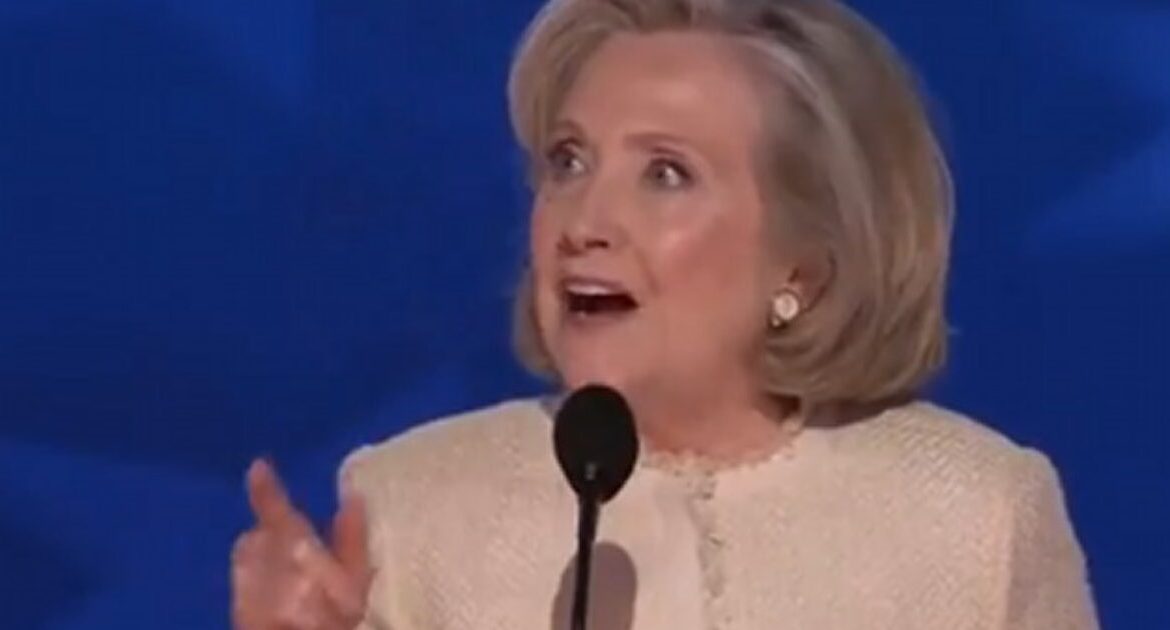
FBI Intercepts Reveal Hillary Clinton’s Shady Discussions on Campaign Donations with Convicted Foreign Felon

Newly released FBI documents show that the bureau intercepted communications involving Hillary Clinton discussing donations with Indian hotel magnate Sant Singh Chatwal, a convicted felon.
The revelations, detailed in documents provided to the Senate Judiciary Committee and published on December 15, expose concerns over foreign bribery, pay-to-play schemes, and the potential misuse of the Clinton Foundation as a personal and campaign slush fund during Clinton’s tenure as Secretary of State.
The documents stem from the FBI’s “Cracked Foundation” investigation, which began probing the Clinton Foundation’s activities as early as 2010.
At that time, The Daily Caller found the FBI recorded Chatwal discussing illegal straw donations to Clinton’s 2008 presidential campaign.
Chatwal, a longtime Clinton family friend, Clinton Foundation trustee, and key fundraiser, pled guilty in 2014 to laundering those donations through straw contributors and forfeited $1 million as part of a deal with the Department of Justice.
In a chilling quote captured by an FBI informant, Chatwal admitted, “That’s the only way to buy them, get into the system,” referring to his efforts to influence politicians through illicit contributions.
By the spring of 2016, as Hillary Clinton was on the verge of securing the Democratic presidential nomination, FBI field officers in New York, led by Assistant Director in Charge Diego Rodriguez, urged headquarters in Washington, D.C., to interrogate Clinton about these foreign donations.
The agents prepared a series of pointed questions that highlighted red flags uncovered in the investigation, including evidence that the FBI had been “intercepting individuals associated with the Clinton Foundation.”
One of the most damning pieces of evidence was a recorded conversation between Clinton and Chatwal, where they discussed settling her lingering 2008 campaign debt.
According to the documents, Clinton reportedly told Chatwal he could no longer donate directly to her campaign but should instead funnel money to the Clinton Foundation.
Agents wanted to ask Clinton directly, “Based on information derived from a recorded conversation, you (HC) and Mr. Chatwal had a conversation regarding settling debt. You indicated to Mr. Chatwal that he could no longer donate to your campaign but he should instead donate to the Clinton Foundation. Were donations made to the Clinton Foundation used for personal use and/or to settle campaign debt?”
This exchange raises serious questions about whether the Clinton Foundation, ostensibly a global charity, was being exploited as a backdoor mechanism to pay off political debts or fund personal expenses, circumventing campaign finance laws.
State Department documents, first revealed through WikiLeaks in 2011, confirmed Chatwal’s role in helping settle Clinton’s 2008 campaign debt, further fueling suspicions of impropriety.
The investigation also delved into Chatwal’s influence on major U.S. foreign policy decisions, particularly the 2008 U.S.-India nuclear deal.
This agreement, which allowed India to receive American nuclear technology exports without joining the Nuclear Non-Proliferation Treaty, was a significant departure from decades of U.S. policy.
Chatwal, who lobbied extensively for the deal, reportedly spent millions of his own money and even called the Indian prime minister to celebrate Congress’s passage of the agreement in October 2008.
In 2010, Chatwal received India’s prestigious Padma Bhushan award for his efforts.
Chatwal himself boasted about swaying Clinton on the issue.
In interviews cited in Peter Schweizer’s 2016 book “Clinton Cash,” which helped spark the FBI probe, he said, “Even my close friend Hillary Clinton was not in favor of the deal in 2006. But when I put the whole package together, she also came on board.” He added, “It took me four years and millions of dollars, which I paid out of my own pocket. I’m very proud of that, because I love my motherland.”
FBI agents sought to probe whether Chatwal’s donations bought influence, asking in their prepared questions: “Mr. Chatwal pled guilty to using straw donors to raise campaign funds for your first presidential campaign along with using large amounts of cash to your husband. To your knowledge, did Mr. Chatwal also provide large cash payments to Indian officials in an effort to secure a nuclear deal between India and the US?”
Adding to the scandal, the documents reveal that the Clinton Foundation continued accepting foreign donations during Clinton’s time as Secretary of State, despite an agreement with the Obama administration to restrict such contributions and disclose them fully.
One question prepared for Clinton read: “You had an agreement with the Obama administration which planned restrictions on receiving donations to the Clinton Foundation from foreign countries, yet the Foundation continued to accept contributions without disclosures from countries where you lobbied for actions. On how many occasions did the Foundation disregard the official agreement to accept contributions from countries you had State Department business in?”
Shortly after the agreement, a separate entity called the Clinton Giustra Sustainable Growth Initiative (CGSGI) was established, which funneled funds to the foundation without the required disclosures.
Agents wanted to ask: “Per your agreement with the Obama administration, prior to becoming Secretary of State, you agreed to disclose all donations made to the Clinton Foundation. Shortly after agreeing to this, the Clinton Guistra Sustainable Growth Initiative (CGSGI) was established. The majority of funds raised by the CGSGI are eventually sent to the Clinton Foundation but no financial disclosures are made by CGSGI. What are the funding sources for CGSGI and how many foreign governments send donations to CGSGI?”
Despite these compelling leads, FBI headquarters in Washington, under the Obama administration, which had appointed Clinton as Secretary of State after defeating her in the 2008 primary, refused to pursue the investigation.
When the FBI interviewed Clinton in July 2016 as part of the separate “Midyear Exam” probe into her private email server, none of these foundation-related questions were asked.
Field agents expressed deep frustration, with one Eastern District of New York assistant U.S. attorney noting in 2019: “We were trying to explore the Foundation, and we were told ‘NO’ by FBI HQ. Field agents were frustrated. But HQ would not let it go forward.”
The post FBI Intercepts Reveal Hillary Clinton’s Shady Discussions on Campaign Donations with Convicted Foreign Felon appeared first on The Gateway Pundit.