
South Carolina State Senator Explains: Blue States Are Wasting Red State Tax Money
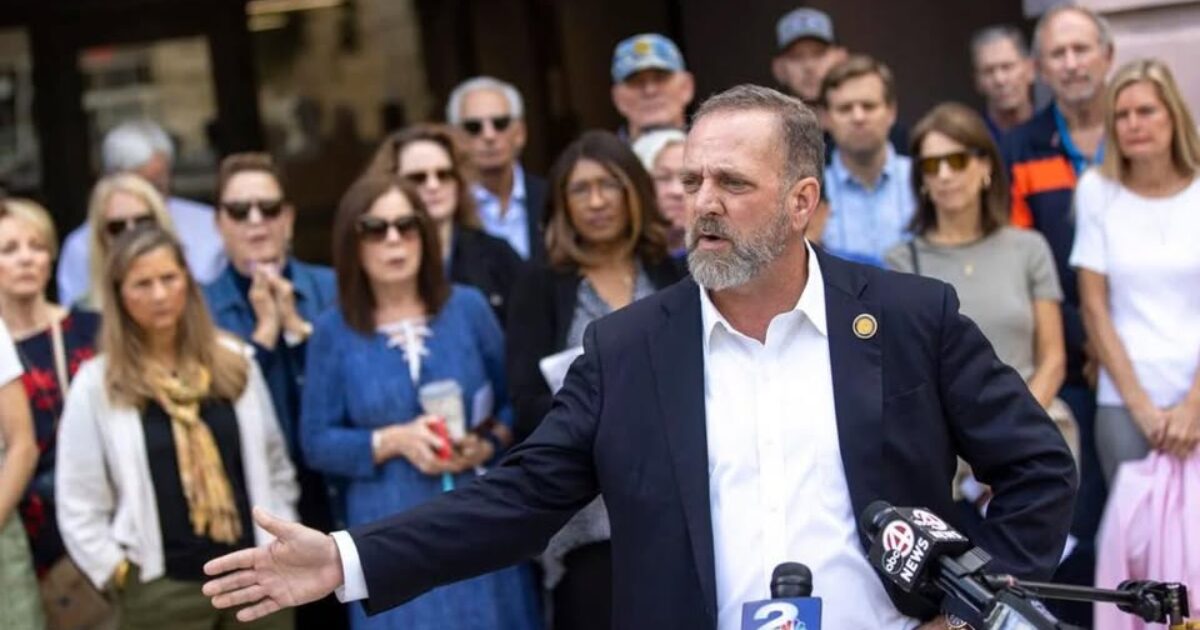
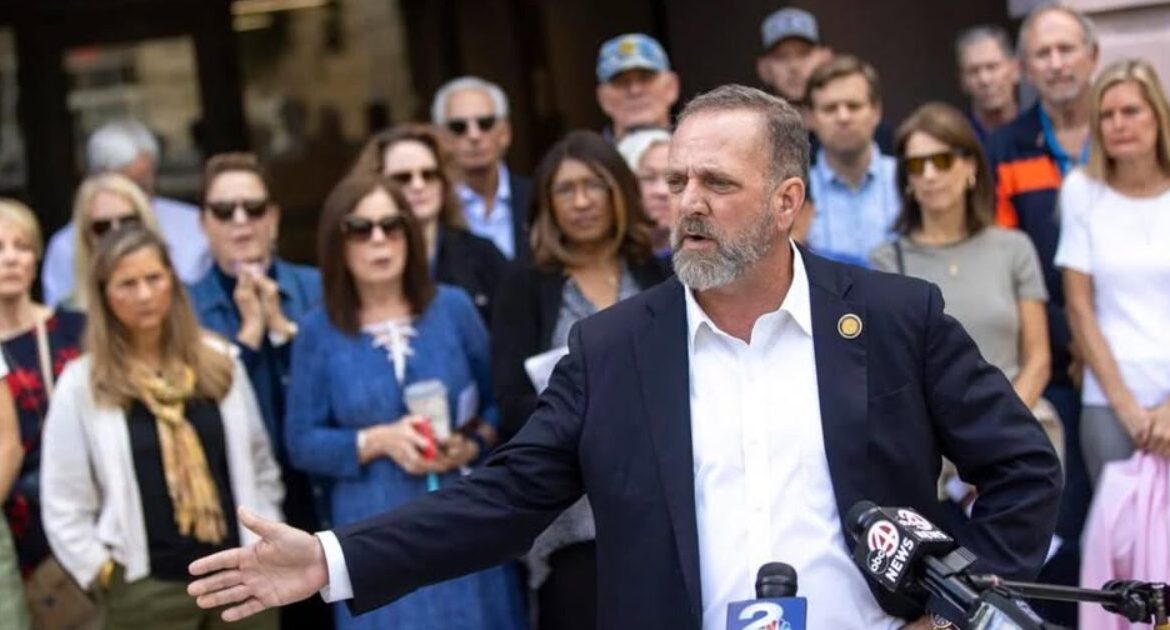
In an interview with The Gateway Pundit, South Carolina state Senator Matt Leber, a Republican and U.S. military veteran, explained how blue states are using federal tax dollars, including contributions from red states like South Carolina, to fund programs for illegal immigrants that conservative states oppose. He argued that this creates a double injustice.
First, South Carolinians are forced to indirectly subsidize policies they fundamentally disagree with. Second, these programs attract and retain illegal aliens, inflating blue state populations through the census and giving them disproportionate congressional representation, further disenfranchising states like South Carolina.
Leber described this as a form of fiscal and political manipulation that exploits the fungibility of federal funding. Even when federal dollars are allocated for legitimate purposes such as transportation or health care, he argued, they free up state funds that can then be redirected toward benefits for illegal aliens.
Referring to California’s Medi-Cal program, which provides free health care to illegal aliens, Leber said it “is technically a state-funded program, it’s a state program, but they receive federal dollars in their budget, you know, billions of dollars.” Because of its smaller size, South Carolina receives far less federal funding than California. California receives approximately 12.5 times more federal funding through its state budget than South Carolina does, about $175 billion compared to $14 billion.
Leber said that in small red states there is far greater direct accountability. As a result, legislators are more likely to introduce bills they genuinely believe in and seek funding for programs that directly benefit their constituents. In contrast, he argued that in California, programs for illegal aliens are funded by “federal money being mixed in with that state program,” something he said “most South Carolinians wouldn’t agree with.”
The push by states like California not only to harbor illegal aliens but to attract them and provide benefits is, in his view, a violation. “I believe that states are undermining our immigration law using federal dollars,” he said. While states are theoretically free to decide how to spend their own budgets, Leber argued that the federal budget is ultimately underwriting these policies.
“Technically, that would mean that South Carolinians are having their income tax payments diverted to programs, one, they don’t agree with, and two, they’re potentially unlawful,” he said.
The Texas lawsuit challenging the 2020 election arose as an example of how changes in one state’s laws can affect all others. In December 2020, Texas Attorney General Ken Paxton filed a lawsuit directly with the U.S. Supreme Court challenging the presidential election results in Georgia, Michigan, Pennsylvania, and Wisconsin. Texas argued that those states violated the Constitution by changing election laws without legislative approval, instead relying on court rulings and executive actions.
In Pennsylvania, the state Supreme Court extended the mail-in ballot deadline from 8 p.m. on Election Day to three days later, overriding a statutory deadline set by the legislature. South Carolina joined 17 other states in supporting the lawsuit, arguing that illegal changes to election laws in one state dilute the voting power of citizens in others by affecting the Electoral College outcome.
The U.S. Supreme Court dismissed the case on December 11, 2020, ruling that Texas lacked standing to challenge how other states conduct their elections. Leber opposed the ruling.
“Pennsylvania changed their laws in the middle of the game,” he said. “And that affects the vote of every South Carolinian when votes in Pennsylvania or in other states doing these underhanded, nefarious things are multiplying their votes. It deducts the power of the individual vote in South Carolina.”
Leber argued that the same externality applies to frivolous spending and fraud in other states. “In Minnesota, they lost $20 or $30 billion. I don’t know if they’ve got a complete number yet. And I can’t imagine that all that money was Minnesota money,” he said.
On this point, the senator is correct. Minnesota’s fraud cases overwhelmingly involve federal funds administered through state programs. Since 2018, an estimated $18 billion in federal Medicaid funding has flowed into Minnesota, with federal prosecutors estimating that up to half may have been stolen through fraud.
Additional losses include roughly $250 million from the federal Child Nutrition Program during COVID, $185 million annually in federal child care assistance funds, and federal Medicaid dollars used for housing stabilization and autism services. Although administered by the state, these programs are primarily funded by federal taxpayers.
Minnesota became particularly vulnerable due to weak oversight, rapid program expansion during COVID, and federal matching grant structures that incentivize states to build systems far larger than they would fund on their own, diluting accountability. Federal prosecutors described the state as a “magnet for fraud,” with organized networks creating hundreds of fake food sites, daycares, and service providers to bill for services never delivered. Investigators and auditors also cited political pressure and fear of accusations of discrimination as factors that delayed enforcement.
In practical terms, these facts support Senator Leber’s argument. Federal money drawn from taxpayers nationwide, including South Carolinians, was poorly administered at the state level and stolen on an industrial scale. In his view, this leaves red-state taxpayers indirectly underwriting fraud and mismanagement in blue states, with no meaningful say in how their money is spent.
“And so I think it’s incumbent on folks like me, representatives of our states, senators, and representatives, to bring this up, bring attention to it, and ask the federal government to do an audit of this whole thing,” he said. “And we’re going to do our own audit. California needs to be asked questions, and so do other blue states.”
On disenfranchisement, he added, “If South Carolinians are already losing at the ballot box, being disenfranchised, and our tax dollars are now being diverted to programs and ideas we don’t agree with, and we don’t even get asked about it, I think that’s just fundamentally wrong.”
The post South Carolina State Senator Explains: Blue States Are Wasting Red State Tax Money appeared first on The Gateway Pundit.