US Patent and Trademark Office Hammers Innovators It’s Supposed to Help

This Opinion Just In…
USPTO Stands Athwart Inventors Yelling: “Stop!”
US Patent and Trademark Office hammers innovators it’s supposed to help
By Deroy Murdock
LAS VEGAS – “America must once again be a country where innovators are rewarded with a green light, not strangled with red tape,” President Donald J. Trump told the Winning the AI Race forum last July. If Trump wants to see strangulation up close, he should visit the U.S. Patent and Trademark Office.
As if it were run by the Wicked Witch of the West, USPTO subjects pioneering inventors to a parade of unpleasant surprises. So far, no inventors report being chased by evil, flying monkeys. But tomorrow is another day.

If an airborne chimpanzee landed on Gilbert P. Hyatt’s desk and torched his files, Hyatt probably would roll his eyes and ask, “What took you so long?”
USPTO has battled the Sin City-based inventor for nearly 30 years. It has forced him through hoops, entombed him in paperwork, and even issued a jaw-dropping No New Patents for Hyatt order that sounds like hyperbole but is confirmed by federal courtroom testimony.
“The Patent Office is prejudiced against independent inventors and against pioneering inventions,” Hyatt told me over lunch, near the legendary Las Vegas Strip. “They used every trick in the book, to try and get rid of me, to delay, and to hope that I would die and then go away.” Hyatt, 87, has denied USPTO that easy victory. “I’m still here today. My patent applications are still alive.”
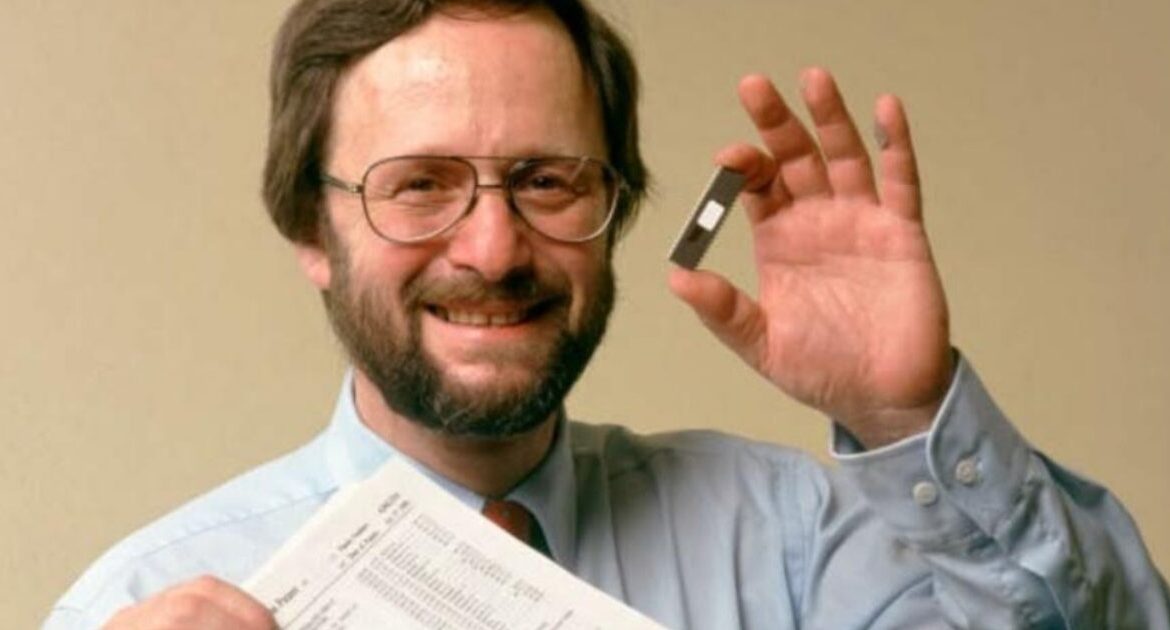
USPTO previously treated Hyatt fairly. From 1971 through 1997, it issued him 75 patents. His licensed patents have spawned such products as the first Canon and Nikon digital cameras, Panasonic TV sets, Sharp’s calculators and liquid-crystal displays, and Sony’s PlayStation. Hyatt’s signature achievement is U.S. Patent No. 4,942,516, for the computer microprocessor, which fuels the Digital Age.

USPTO issued Hyatt zero patents in 1998. It had done so in 1972, 1981, and 1993. Even pioneering inventors have quiet years. But in 1999, for the second consecutive year, USPTO issued Hyatt zero patents. Likewise, in 2000. Nothing.
And that’s the way it is: Hyatt has received precisely zero patents in 27 years. And not for lack of trying. Throughout that interval, Hyatt has had unfinished business before USPTO. And he still does.
The brass ring is a patent pending (but not yet issued) for artificial intelligence. USPTO’s examiners recognize the validity of Hyatt’s 1984 application for the patent on all A.I. His application faced challenges from others who claimed to have created what could become the 21st Century’s defining technology. Hyatt defeated these pretenders in court and before USPTO’s appeals boards. All judgments hold that he conceived AI first. Thus, his AI patent pending should become a patent — with all that this would entail.
Appellate bodies repeatedly have told USPTO to issue Hyatt’s patent. But the agency will not budge.
Hyatt is like a man with a reservation, a plane ticket, and his name on a jumbo jet’s seating chart. Regardless, the stone-faced gate agents bar him from the 787’s door.
Hyatt’s multifarious tortures — courtesy of USPTO — are mind-blowing. Indeed, the agency’s diverse techniques for hurting Hyatt recall President Trump’s Biden-era travails. Week after week, Trump 45’s enemies hammered him with one inexplicable indictment after another show trial after another unprecedented ruling. Trump and Hyatt should feel each other’s pain.
Agony and no ecstasy: USPTO brass order No New Patents for Hyatt
On September 27, 2023, USPTO’s former Patent Program Administrator, Howard Goldberg, testified under oath in U.S District Court in Washington, D.C. Regarding Hyatt’s patent applications, Goldberg said: “I received two directives” from Assistant Commissioner for Patent Policy Steve Kunin in 1997 or ’98. First, Goldberg said that Kunin told him to “segregate all of his [Hyatt’s] applications into single art units, so they weren’t spread among the tech centers.”
Goldberg continued: “The second was to do whatever I could to ensure that these [Hyatt’s] cases would not get issued as a patent.” Goldberg reiterated: “I was directed to put them [Hyatt’s applications] — group them together and not allow them to be published as a patent.”
Two days later — September 29, 2023 — Edward Kazenske corroborated Goldberg’s jaw-dropping testimony. Kazenske swore under oath that around 1997-98, while he was acting assistant commissioner for patents, he discussed Hyatt’s cases with Steve Kunin, one of his USPTO employees. Kazenske testified that afterward, “I informed Mr. Goldberg that we were not going to issue those patents to Mr. Hyatt.” Kazenske added that he told other relevant staffers about Hyatt’s files. “I asked them to withdraw those applications immediately from issue.”
Hyatt has not received a patent since. In fact, at about that same time, USPTO rescinded four patents that he just had earned!
Government limits on finite benefits make sense. Since Washington, D.C. lacks bottomless resources, millionaires do not feast on Food Stamps, and billionaires do not attend college via Pell Grants. However, USPTO could issue 1,000 patents a day without depleting the total quantity of intellectual-property protection.
USPTO’s decreeing that Hyatt had received his lifetime supply of patents was as absurd as telling Clint Eastwood: “Sir, between 1971 and 2024, you have directed 40 motion pictures. That’s enough. No more copyrights for you!” Or imagine someone from Washington telling Stephen King, ”Between Carrie and Never Flinch, you have published 65 novels. That’s more than your fair share. We will issue you zero new copyrights. Have you considered sculpting?”
Even if one believes that inventors can earn no more than “their fair share” of patents, Hyatt is far short of that ceiling. America’s most legendary inventors hold far more patents than Hyatt’s 75.
- Electric-equipment pioneer Nikola Tesla: 112 patents
- Automotive visionary Henry Ford: 161
- Apple guru Steve Jobs: 300-325
- Electric-generation pathfinder George Westinghouse: 360
- Earth’s most famous inventor, Thomas Edison: 1,093
- Current US record holder – Qualcomm wireless innovator: Tao Luo: 4,332
Back to Square One
After issuing Hyatt zero new patents between 1998 and 2013, USPTO suddenly dropped its previous examination of his applications, dumped 15 years of work, and re-started the entire process. This re-do now slouches toward its 13th year.
SAWS Tried to Cut Hyatt in Two
USPTO created the Sensitive Applications Warning System in 1994. SAWS placed certain inventors in a top-secret status that put their applications into Purgatory. SAWS let USPTO’s bureaucrats saw logs rather than judge patent eligibility. Even worse, SAWS-afflicted inventors had no clue that they were relegated to that outpost.
Hyatt’s assorted applications were corralled into SAWS Art Unit 2615 (as in “state of the art”), from which they could not escape, thanks to a routine approval or some employee innocently doing his job. Indeed, Hyatt’s forms were flagged via USPTO’s Patent Application Locating and Monitoring database. PALM detected updates in Hyatt-related items and immediately escalated them to USPTO’s hostile top brass. This eased maximum enforcement of the No New Patents for Hyatt decree. SAWS allegedly was “retired” in 2015, but the Biden Administration seems to have resurrected it in 2021.
Biennial turnover of patent examiners
Every two years, USPTO changed the personnel who reviewed Hyatt’s patent applications. One set of examiners boarded the Get Gil Express, alighted after two years, and then yet more, brand-new examiners hopped on. They, in turn, had to conquer the learning curve before having any idea what to do with Hyatt’s applications. Ironically, with Hyatt, USPTO reinvents the wheel — recipient of Patent No. 1.
Hyatt says that those who evaluated his files “were bribed with raises and promotions, from GS-14 to GS-15,” if they applied tougher, more rigorous SAWS-type criteria.
Judgment by irrelevant experts
It would be bad enough if these ever-changing examiners at least understood computers, software, and microchips. Unfortunately, since 2013, USPTO has assigned Hyatt new inspectors who are generalists or experts in other disciplines. While all must familiarize themselves with Hyatt’s applications, others first must recall their basic infotech. Hyatt’s application to patent a computerized illumination-control system was reviewed by — naturally — a chemical-coatings specialist.
USPTO’s overall approach has been to sentence Gil Hyatt to death by a thousand paper cuts. “I have filed more than 80 briefs with the Board of Appeals, to get out of the clutches of the USPTO Examining Corps,” Hyatt tells me. “I have filed more than 1,000 petitions to end the USPTO’s delays.”
This adds up. Through 2025, Hyatt estimates, he has spent “more than $10 million in fees paid directly to the USPTO, not including fees and expenses paid to others, such as patent attorneys, and prosecution support fees and expenses.” (“Prosecution” does not involve jailing criminals. Here, “prosecution” encompasses applying for, negotiating over, and — one hopes — securing patents.)
Of course, USPTO also devours an irreplaceable commodity: Time. Every hour Hyatt spends litigating is an hour he does not spend innovating. This makes the world a poorer place.
Gil Hyatt’s USPTO Hell makes Franz Kafka’s world seem like a straightforward, transparent, and predictable Heaven. Today’s biggest miracle might be that the inventor of artificial intelligence takes this so calmly. Job could take patience lessons from Hyatt.
Weaponization: USPTO’s Pit of Despair
This all reeks of weaponization. Indeed, Edward R. Martin, Jr., director of the U.S. Justice Department’s Weaponization Working Group, wrote USPTO on June 23 regarding “allegations of weaponization” by that agency’s “policies and procedures against American companies and inventors.” Martin also expressed interest in “a Biden-era directive to secretly flag pending patents and allowable patent applications and claims to prevent them from issuing.”
Hyatt is not alone.
“For much of the last 30 years, the USPTO has frozen applications, blocked allowances, and manipulated prosecution timelines behind closed doors,” Gene Quinn wrote in November 18’s IP Watchdog. Quinn cites USPTO’s notorious SAWS program, “which has secretly hauled off so many applications into the pit of despair.” Quinn adds: “How many fell victim to this government-manufactured trap is not known because there has never been a full accounting.” Estimates of USPTO’s battered inventors stretch from hundreds into thousands.
Corliss Orville Burandt is another prominent USPTO victim. Like Hyatt, the creator of automotive-engineering products has struggled for some 30 years to patent several inventions. “The patent office tried to paper Burandt’s legal team to death,” Harry Goldstein wrote in October 28, 2024’s IEEE Spectrum. “As of this writing, Burandt still hasn’t seen a dime from his inventions. He subsists on his Social Security benefits.”
How did this happen?
How did a previously pro-inventor agency devolve into an IP dungeon? USPTO’s critics accuse it of having a culture of contempt toward individual inventors and small-company innovators — those who populate the suburban garages where Amazon and Apple were born. USPTO prefers to work with major corporations. Large organizations of a feather flock together. IBM and Xerox, for instance, pay USPTO millions in annual patent-maintenance fees. Solo inventors pay thousands.
There also is the federal revolving door. Making life easy for, say, Cisco Systems or Oracle could boost the job prospects for a humble USPTO employee. A recently updated May 2018 National Bureau of Economic Research study discovered that “revolving door examiners grant 12.6-17.6% more patents to firms that later hire them.” Why would an examiner scrutinize Hyatt’s applications when Hewlett Packard’s papers also occupy her desk, just as she’s plotting her next career move? Visions of a corner office at HP magically make 14th Amendment equal protection concerns vanish.
Like the hundreds, if not thousands, of pioneering individual inventors whom USPTO has shunned rather than shielded, Gil Hyatt has endured serious injustice. USPTO’s victims include him, his family and loved ones, and potentially 8.2 billion men, women, and children who are missing the benefits of his innovation.
Hyatt’s patent applications include technology to sharpen the details and improve pattern recognition in X-rays and other medical images. This should help doctors more accurately and swiftly diagnose diseases, fractures, and other health challenges. How many Americans and others have stayed sicker longer because USPTO has embargoed the patent on just this invention?
USPTO ignored requests for comment.
Saddest of all, USPTO’s foot-dragging, pain-inducing, no-response shonda deprives America of what Hyatt offers, if this agency ever issues him the AI patent that every final ruling indicates is rightly his.
Hyatt wants USPTO to turn his patent pending into a patent — period — that he promises to donate to the American people via a new non-profit. The Pioneering AI Foundation would be led by presidential appointees and prominent private-sector individuals. “I will assign these patents to the Foundation, for philanthropic purposes and to help the Trump Administration with its trade policies,” Hyatt pledges.
Hyatt says that he wants precisely $0.00 from this charity. Instead, his proposed PAI Foundation would use Hyatt’s AI patents to give the president priceless bargaining chips in his global-trade negotiations. US companies could license Hyatt’s patent for free. Foreign companies — not least China’s — would pay license fees to the PAI Foundation or face International Trade Commission-driven exclusion from America due to patent infringement. The ensuing funds would not flow into Hyatt’s pockets. Instead, they would underwrite STEM education and innovation instruction for students, especially the disadvantaged.
The fact that Gil Hyatt maintains such a constructive and philanthropic attitude after all the torture that USPTO has inflicted on him may yet yield this supremely happy ending: America in the AI driver’s seat, China huffing and puffing to keep up, and American kids enjoying STEM education financed by billions in patent-license revenue.
One call from President Trump to USPTO — “Give Gil Hyatt his AI patent already” — would set these wheels in motion.
Deroy Murdock is a Manhattan-based Fox News Contributor.
The post US Patent and Trademark Office Hammers Innovators It’s Supposed to Help appeared first on The Gateway Pundit.