
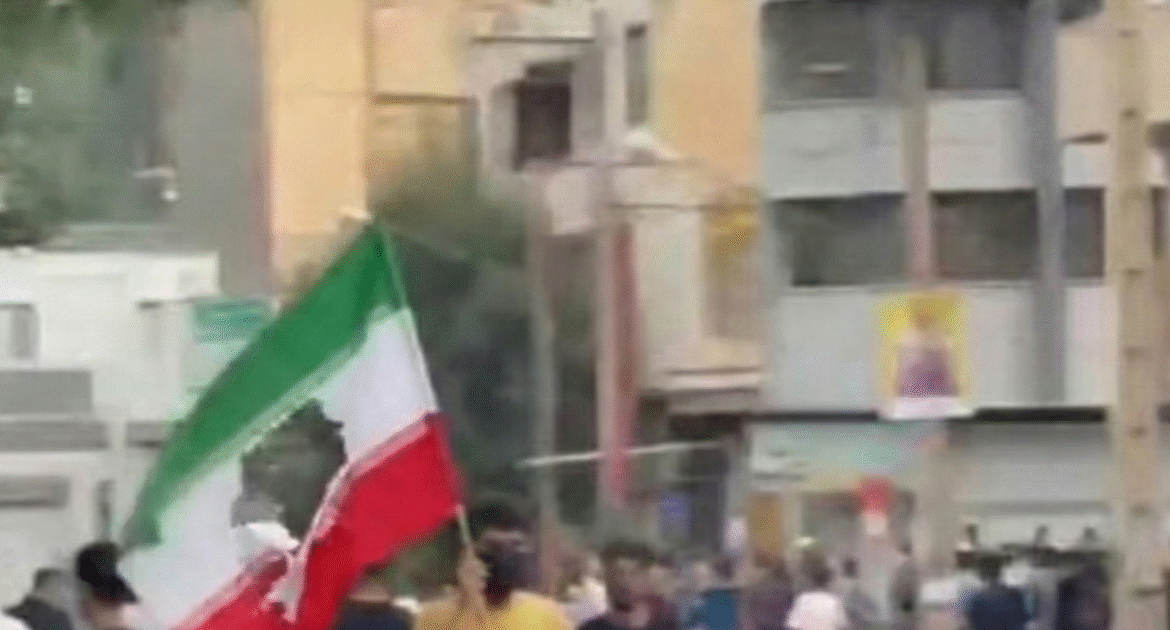
“They Will Not Be Coming Back”: An Iranian in America Describes a Regime’s War on Its People


Eager to talk about the anti-regime protests, fifty-three-year-old Reza said, “The government doesn’t care.” He escaped Iran 15 years ago and now drives Uber in Washington, D.C., while closely monitoring the ongoing violence and the protesters’ deaths, which have affected him deeply.
“They don’t care about people’s age. Two years old or 100 years old, anyone who comes out to protest, they kill the people.” He shook his head in distress. “That’s not right, that’s not right,” he repeated.
Reza arrived in the United States in 2014 and, several years later, in 2021, became an American citizen. His family was not so lucky. Four members of his family died under suspicious circumstances during the Covid pandemic, and Reza believes the regime killed them.
He still has one sister and two brothers in Iran, but communication with them has become nearly impossible because the government has shut down not only the internet but even home phones since the protests began on December 28, 2025.
When asked about Iranian sentiment toward the Ayatollah, Reza’s response was immediate. “I’m so sorry about that,” he said, struggling to find words strong enough.
He estimates that the regime has killed approximately 100,000 people during recent crackdowns, a figure he believes with absolute certainty.
Human rights organizations have estimated the death toll to be between 3,500 and 5,000 people. Monitoring has been difficult because of internet and phone blackouts, and the true number is likely higher.
A report by doctors on the ground estimates that at least 16,500 protesters have been killed and more than 330,000 injured, with most victims reportedly under the age of 30.
Hospital records from multiple provinces show extensive use of lethal force, including gunshot and shrapnel wounds to the head, neck, and chest, suggesting civilians were targeted with military-grade weapons.
Eye surgeons have reported an estimated 700 to 1,000 people losing an eye, including roughly 7,000 eye injury cases recorded at a single hospital in Tehran.
Doctors further reported fatalities linked to blood shortages, saying some medical staff donated their own blood, while security forces allegedly blocked blood transfusions in certain hospitals, contributing to additional deaths.
At the same time, Reza’s claim of 100,000 deaths appears to be driven more by emotion than evidence. However, Reza said he had seen previous protests and knew the regime lies.
Regarding the more than 24,000 protesters who had been jailed, “And after, they will not be coming back,” he said. “They do not kill them in protest,” he added, drawing a hand across his throat. “They will kill in jail.” According to Iranian resistance media, between January 5 and 15 the regime executed at least 127 prisoners.
He described scenes of workers picking up bodies with their bare hands and loading them onto trucks to be dumped somewhere out of sight.
Those who are not shot will be tortured. “They gonna take out the nail, they gonna cut in the finger, they gonna cut in the legs, you know. They not gonna do one time kill the people with gun.”
The fundamental difference between America and Iran, Reza explained, is freedom, particularly the freedom to dissent without being killed. “In American, if we don’t want a government, no one gonna kill us,” he said. In America, citizens can protest, can question their government. “But Iran, it’s not like that. They just take out the gun, kill the people, and then people don’t have a gun.”
If Iranians were armed like Americans, Reza believes the regime would fall. “If Iranian people have gun, you believe me, ten Iranian people have a gun, they can kill 2,000 army,” he insisted.
The day before our conversation, Reza had driven to Washington, D.C. to join a protest supporting the Iranian people. He was encouraged by the turnout, not just Iranian expatriates, but many Americans who came to stand in solidarity. “A lot of Iranian people and then American people came to help Iranian people,” he said with gratitude.
Despite 15 years in exile and a decade in America, Reza cannot disconnect from Iran’s suffering. He said that since the protests began he has greatly cut down his working hours, spending much of his time searching for news and worrying about his siblings and his birth nation.
“The protests already stopped because the government doesn’t care,” he said sadly. He explained that once protesters realized they would simply be mowed down with no hope of bringing about regime change, they gave up.
“That’s not right,” Reza repeated throughout our conversation, a simple phrase that encapsulated everything that was wrong with the way the Iranian regime has abused its own population.
The post “They Will Not Be Coming Back”: An Iranian in America Describes a Regime’s War on Its People appeared first on The Gateway Pundit.